Author name: Jack Sullivan

Distiller S.T. Suit and “The Alabama Claims”

S.T. Suit

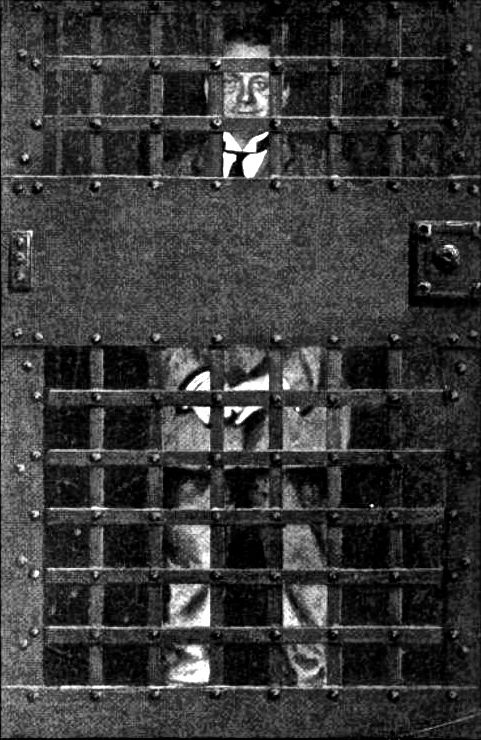
Whiskey baron Samuel Taylor (S. T.) Suit whose distillery and mansion sat in what is now Suitland, Maryland, adjacent to the District of Columbia, was an early example of a “Washington insider,” wining and dining Presidents, members of Congress, and high Executive Branch officials. Although a past post (see August 4, 2011) described Suit’s life and loves in detail, one event in which he played a pivotal role was omitted. Suit was responsible for the venue of negotiations that helped settle a prolonged legal battle between the United States and England in the wake of the Civil War. 

Throughout his career Suit was a man with a keen eye for political clout and ingratiated himself with the power brokers of his time. Colorful trade cards for his whiskey focussed on of Washington, D.C. One shown here speaks of “fine Kentucky whiskey,” but shows the U.S. Capitol, including the back of a toga clad George Washington statue that once stood there.  Suit used a second view of the Capital as his letterhead and on ads.

Suit matched them with two colorful trade cards of the U.S. Congress in session, Senate and House of Representatives, looking much as they did in his time. It may be assumed that Suit himself frequently was in the gallery or to be found chatting in the members’ lobbies. 


The Maryland distiller did not come empty handed to the Congress and Suit’s whiskey containers were said to be a frequent sight in the U.S. Capitol. His gifting made him a welcome figure in those hallowed halls. He also made sure his whiskey was sold in the finest Washington D.C. hotels where many senators and congressmen spent  their leisure hours.

Suit’s push for influence in the Nation’s Capital paid off in several ways. One trade card provided testimonials for the strength and purity of his whiskey from two District of Columbia officials, the president of the DC Board of Health and an Health Department medical officer. The latter asserted: “Physicians will appreciate how important it is to their success in the treatment of diseases, as well as to the patient, that the stimulants they prescribe should be of a standard and unvarying quality, which desideratum Col. Suit’s liquors appear to fill.” 


The canny distiller also used his influence to convince federal officials to built a road from Washington to his estate, known today as Suitland Parkway, and he lobbied successfully for a U.S. post office to be authorized for Suitland when it was largely a rural community and had few residents.  Suit’s lavish entertainment of top government officials, including Presidents Ulysses S. Grant and Rutherford B. Hayes, frequently was noted in Washington newspapers. Likely it was this hospitality that caused Suit’s mansion to be chosen for the conduct of the most sensitive negotiations with England since the War of 1812. 


The dispute concerned warships built in Britain and sold to the Confederacy during the Civil War. Although the British Foreign Enlistment Act of 1819 had forbidden the construction of foreign warships, the South was still able to evade the letter of the law and purchase a number of cruisers from Britain. Confederate warships destroyed or captured more than 250 American merchant ships and caused their owners to covert 700 more vessels to foreign flags. By the end of the war, the U.S. Merchant Marine had lost half its ships.


The most famous of those marauding vessels was the CSS Alabama, shown above left being sunk in battle by the USS Kearsarge  Before its end, however, the Alabama had done significant damage to the American merchant fleet.  Less famous was the CSS Florida, right, that attacked Yankee ships in the South Atlantic until it was captured and disabled off the coast of Brazil. Both vessels figured importantly in the legal wrangling.


Powerful forces in Washington howled for retribution in what became known as “The Alabama Claims.” Senator Charles Sumner, chairman of the Senate Foreign Relations Committee, wanted $2 billion in damages ($50 billion in today’s dollar), or alternatively, the ceding of all Canada to the United States. Secretary of State Seward was more generous. He suggested the U.S. being given only British Columbia. Other important Yankees coveted Nova Scotia as compensation.  Those became known as “indirect claims.”  Translation:  Not money, just lots of territory.


Public and Congressional fervor over annexing parts of Canada caused the British to stall negotiations for many months after the end of hostilities. Finally in 1870 President Ulysses S. Grant sought to end the dispute through diplomatic talks. To save face, the Washington powers insisted that an initial agreement had to be negotiated on U.S. soil. But where? Grant apparently remembered Suit’s ample food and drink, including his excellent whiskey, and decided that the Suitland estate in nearby Maryland was just the place for American and British diplomats to hammer out the details, as depicted below. 


Suit himself apparently was delighted with the choice of his home and played genial host throughout the deliberations.  He also insured that his whiskey was readily available to help “lubricate” the discussions. The resulting agreement became known as the Treaty of Washington. A sticking point, however, continued to be the lust for all or part of Canada by important American political figures.  When the deliberations also failed to settle the amount of recompense for damage to American ships, the two sides agreed to referring monetary compensation to an international third party tribunal, thus breaking new ground in international dispute resolution.


Negotiating the Treaty of Washington

The British, however, strongly refused to recognize the validity of territorial demands. The dispute remained unsettled until 1871,when the “Alabama claims” at last was referred to an arbitration tribunal convened in Geneva, Switzerland.  The international arbitrators threw out the so-called “indirect” claims and awarded the United States $15.5 million for verifiable losses to shipping caused by the Confederate warships. The British, knowing a good deal when they saw it, quickly agreed to pay up.  Adjusted for inflation, the settlement would be the equivalent of $400 million today.


The highly popular American magazine, Harper’s Weekly, ran a front page cartoon of the Geneva proceedings, indicating disappointment that the award had not been larger.  Uncle Sam is shown addressing the tribunal of judges, pictured as a group of overweight and seemingly distracted Europeans.  The symbol of America clearly is disappointed with the outcome, warning the judges that the precedent set by their decision might be used to American advantage in the future:  “Sour grapes” are barely disguised.


The Geneva Tribunal


S.T. Suit, the Washington insider, had etched his name in the history books. Sadly his mansion burned to the ground several years later and was never rebuilt. The Treaty of Washington, it should be noted, has been cited by legal scholars during ensuing years as establishing the principle of third party arbitration, fostering international law and a precursor to the Hague Convention, the World Court and even the United Nations.


Triumphs and Tragedies of Louisville’s Nathan Block


By the time Nathan Block entered the Louisville liquor trade in the late 1870s, the Kentucky city was fast becoming the whiskey capital of America.  Competition was intense.  Finding a marketing niche was challenging.  While others were championing low cost booze, Block chose to aim high.  Thus he is remembered and honored as a broker, wholesaler and ultimately distiller who promoted and sold the finest in Kentucky bottled-in-bond whiskeys.  At the same time, however, Block’s life was plagued by setbacks and family tragedies.


Block was born in Bavaria in August 1844, a state in the Germany where Jews regularly had faced discrimination.  Two years before his birth all Jews had been expelled from the province of Upper Bavaria.  This persecution may have led his father, Moses, to emigrate with the Block family to the United State when Nathan was ten years old, settling in Louisville. The father built a productive life in America for his children, insuring that they were given good educations. It was said that:  “With an unrelenting work ethic, his father, Moses, instilled in [Nathan] the belief that anything was possible if you were willing to work hard enough for it.”


 Upon achieving maturity Nathan initially worked in the wholesale dry goods business.  He soon tired of that occupation and abandoned lingerie for liquor.  In 1875 with his younger brother, Joseph, and a friend, Emile Franck, they established a whiskey brokerage firm, buying from quality Kentucky distillers and selling to liquor dealers in some 29 states coast to coast under the name Block, Franck & Company.


An 1888 publication, “The Industries of Louisville and of New Albany, Ind.” referred to the partners as: “Composed of active, energetic young men, and every member travels from one year end to the other….”  As brokers, Block and his partners specialized in selling top shelf bourbon, reputed to be able to supply the best whiskey available in Kentucky:  “This house deals only in goods in bond, and all shipments are made directly from bonded warehouse, thus assuring to the trade that the whiskies are perfectly straight, the most desirable feature for retailers buying their goods.”  For a time the brokerage operated from an office in the Columbia Building, Louisville second tallest structure, shown here.


Frustrations over obtaining sufficient quality product may have moved Block, Franck to expand into a full-fledged wholesale liquor operation located at 205 West Main Street on Louisville’s famed “Whiskey Row.” There the partners also featured proprietary brands of whiskey, likely blended in their own quarters.  Their whiskeys included “Kentucky Oaks,” “Kentucky Derby,” ”Tremont,” and “Gold Dust.”  Their flagship brand appears to have been “Old Thoroughbred Rye,” shown below in a flask and back-of-the-bar bottle.  Although it is claimed that the partners registered their brand names under the trademark laws, I can find no evidence.


The Bernheim Brothers

As with many liquor wholesalers, the problem of securing sufficient quality whiskey was a continuing problem for Block as the demand for his bourbon grew.  Seeking to buy at least a share of his own distillery, he found an opportunity when the Pleasure Ridge Park Distillery came on the market.  That distillery had been built by F. G. Paine on the  Dixie Highway adjacent to the Newport News & Mississippi Valley Railroad about eleven miles from downtown Louisville.  To afford the property Block joined in a partnership with the Bernheim Brothers who already owned a highly successful distillery in the city. [See my post of December 10, 2014.] Bernard Bernheim became president;  Block was vice president.


With a capacity of producing 10,000 gallons of liquor per day, the Pleasure Ridge Park Distillery was able to turn out ample quantities of premier Kentucky whiskey, both bourbon and rye.  Having an assured supply of superior product from a distillery already known for quality, Block must have been euphoric as he contemplated the future.  Shown below is an ad depicting the distillery and listing its prime brands.


In March 1896, however, disaster struck while Block was away on a sales trip to New Orleans.  Fire destroyed a warehouse that contained an estimated 30,000 barrels of whiskey.  It started as an ember from a smokestack that landed on the roof of one of the warehouses. In less than ten minutes, the flames spread to the barrels aging on the upper floor, causing them to explode.  Flaming whiskey flew everywhere. The building collapsed.  Surrounding ditches overflowed with liquor as the adjacent landscape was inundated.  The nearby distillery structure itself luckily remained intact.


The Bernheims’ losses were moderate and covered by insurance. The bulk of the whiskey destroyed was in the name of Nathan who as a result was hit hard financially.  Moreover, the federal government claimed that the partners owed almost a million dollars (some $30 million today) in taxes on the lost liquor.  A few distillers had attempted to scam the feds by staging phony fires while their whiskey was stashed elsewhere. The government seemingly was taking no chances.


At great expense Nathan and his partners fought the fine in court for almost a year. The day before Thanksgiving in 1897, the Secretary of the Treasury canceled the bond, forgave the tax, and, in effect, freed Block and the Bernheims of any further liability.  In the meantime the Bernheims had built a completely new distillery at Seventh Street and Bernheim Lane in Louisville.  They sold their interest in the subsequently restored Pleasure Ridge Park Distillery to Block. 


To quote one observer: “While many a lesser spirit might have thrown in the towel, it was not in his nature. From the ashes he lifted himself, soon turning calamity to victory with the acquisition of the newly rebuilt distillery. At long last, Nathan Block had finally become the sole owner of his own distillery; a bourbon king of his own making!”  Block celebrated by adding two more brands to his offerings, “Kentucky Cornflower” and “University Club.”


Block also was distinguishing himself by community involvement.  He was president of the Standard Club, a Louisville golf course; a past master of the St. George Lodge, Free and Accepted Masons, and a member of the  the Commercial Club and Louisville Board of Trade.  Much of his effort was devoted to his Jewish heritage as president of the Temple Adath Israel congregation in the early 1890s and active in the charity work of the Hebrew Relief Society.


Throughout his early years Block had also found time for a personal life. In 1870, he had married Clara Gotthelf, a local girl.  Clara was 21; Nathan was 26.  They would go on to have a family of seven children, four daughters and three sons, all born between 1871 and 1889.  As his boys, Joseph and Bernard, advanced to maturity, Block brought them into his liquor business, eventually changing the name to Block & Sons Company.  Having suffered from asthma and other infirmities for years, in 1903 at age 59 Block retired from the enterprises he had built and left them to the management of his two sons.  If Block looked forward to a comfortable and trouble free retirement, however, that was not to be.


In 1907 after 37 years of marriage, Block’s wife Clara died, 56 years old.  A year later his eldest son Joseph, 35, the heir apparent to the Block liquor dynasty, was dead by his own hand.  For about five months before his suicide Joseph had suffered from depression, said in part brought on by his mother’s death and had been being treated at a mental hospital in Philadelphia.  On the day of his suicide Joseph gave no hint of what was to come. He went to the bathroom adjacent to his office, locked the door, took out a .38 revolver, stood in front of a mirror, and fired a bullet into his right temple.  In addition to a grieving father, Joseph left behind his widow, Cora, and two young children.  His brother Bernard assumed management of the distillery.


Block’s “tragedies” were not destined to end there.  Seven years after Joseph’s suicide, his youngest son, Walter, only 26 and unmarried, who had been troubled with ill health from adolescence, in 1915 repeated his brother’s deed.  While living at home with his father, Walter fatally shot himself, again standing before a mirror.  He was buried in Adath Israel Cemetery next to his brother and mother.  


The patriarch himself would die of natural causes at home two years later.  Block was 73 years old and joined family members at Adath Israel.  The family monument and his gravestone are shown below.  Block left an estate worth more than $3,000,000 in today’s dollar.  His will gave bequests to his children, grandchildren and several Jewish charities.


Block’s legacy has been summarized by one whiskey guru this way: “…He had indelibly left his mark in the annals of bourbon history.  Block’s whiskey brands continued to enjoy robust national distribution via his son’s aptly named “Block Bros” whiskey wholesale and brokerage business for nearly 20 years until the onset of Prohibition.”


Note:  This post has been made possible by three principal sources.  The 1886 publication, The Industries of Louisville, etc., provided details of Block’s early days in business.  “Block, Our Story” from an organization reviving the brand online filed in distillery details and is the source of the quote that ends this vignette.  The 2021 book, Bluegrass Bourbon Barons, by Byron S. Bush devotes a chapter to Block and is the source of  information on his sons’ suicides. 


“Paddy” Graydon: Soldier, Saloonkeeper, & “Fearless Leader”

Born in Northern Ireland, James “Paddy” Graydon became a noted figure in the American West who confronted rampaging Indians, Confederate soldiers and gun-toting outlaws during a single violent decade (1853-1863) punctuated by his running an Arizona drinking establishment and hotel the locals called Casa Blanca.  The Graydon saga ended when he was killed by a bullet fired by a U.S. Army surgeon.

Graydon was born in 1832, the son of William and Mary McConnell Graydon, in the impoverished Northern Irish village of Lisnakea, adjacent to the town of Enniskillen, County Fermanaugh.  As a boy he witnessed two calamities, the early death of his father and the beginning of the Irish Potato Famine during which an estimated million people died.   As soon as he reached maturity, Graydon took passage for America, arriving in Baltimore early in 1853.


“A fine lookin’ lad” at five feet, seven inches tall, blue eyes, brown hair, and a fair complexion, Graydon applied for and was accepted in the First Dragoons, an elite U.S. Army regiment, shown here.  He was sent for training at Carlisle Barracks in Pennsylvania and then ordered to the New Mexico Territory.  The trip was an arduous one, involving crossing the Appalachians on foot, then boarding a steamboat to Fort Leavenworth, Kansas Territory.  There began a 750 mile foot march on the Santa Fe Trail to the New Mexico Territory.  


Arriving in Santa Fe in August 1853, Private Graydon was deployed to Company G, stationed at a small outpost called Fort Buchanan.  His next five years would be full of action as the dragoons were summoned frequently to deal with marauding Indian bands menacing settlers.  Raised to corporal, the Irish youth apparently tired of being constantly on the move and applied for a discharge.  It was granted in April 1858.


Entranced with the Desert Southwest, Graydon, now 26, decided to stay and try his hand at running a saloon and hostelry.  Calling it the United States Boundary Hotel, he located it in a small settlement on the banks of the Sonora River, shown here, close to Fort Buchanan with its drinking population of soldiers.  A one-story adobe building it became known as the Casa Blanca.  Graydon advertised his hotel’s “fine assortment of wines, liquors, cigars, sardines…and good accommodations for the night.” 


His establishment apparently was an immediate success, helped by his forging a business relationship with Sarah Bowman, the most famous woman on the desert frontier.  Arriving at Casa Blanca in 1856, she already had a reputation for her attention to the needs of dragoons.  A large woman, accounted a heroine by many, she was described this way:  “They called her old Great Western. She packed two six-shooters, and they all said she shore [sic] could use ’em, that she had killed a couple of men in her time. She was a hell of a good woman.”


Likely the woman with a knife shown above in a painting of the Casa Blanca barroom, Sarah was able to help Graydon keep order among the tough gun-toting clientele that mixed desperadoes with soldiers — and women.  At the Irishman’s hotel: “Señoritas sang songs, waited tables and cooked, sometimes dealt cards, and always smiled at the rough patrons, laughed at their crude jokes and helped them to forget just how very far from home they were.”  Graydon’s place, it generally was agreed, was “a pretty tough joint, but a good saloon.”  The proprietor became the richest man in the valley, in the 1860 census owning real estate valued then at $3,000 and personal property worth $10,000.  His holdings included a farm and a small herd of beef cattle.


With his wealth came responsibility.  Eventually Graydon assumed the role of informal enforcer of local law and order, willing to engage in gunfights to drive out the outlaw element in the vicinity.  The Army also paid him a stipend, said to be a handsome $10,000 a month, as a scout and tracker of deserters from Fort Buchanan.


Graydon seems to have left that life behind behind in 1861 with the outbreak of the Civil War.  He rejoined the Army, this time as an officer, raising a company of irregulars that came to be known as “The Independent Spy Company.”  This unit provided Union forces with intelligence and harassed invading Confederates, troops largely made up of Texans.  Below is an artist’s depiction of what I believe is a painting of Graydon with straw hat and pipe leading his men tracking Rebel forces.


During this period, Graydon has been credited with instigating one of the most bizarre incidents of the American Civil War.  He planned what he believed was an ingenious night attack on Confederates camped across the Rio Grande.  With several of his men he loaded two aged mules with explosives and led them across the river.  About 150 yards from the Rebel camp, fuses to the shells were lighted and the mules were slapped on the rump and sent running toward the sleeping Texans.  Then Graydon and his  men waded back across the river toward the safety of their fort.   The mules, however, failed to move far and instead turned around and galloped back toward the retreating and suddenly panicked conspirators.


The night quiet suddenly was shattered by exploding shells that sent hundreds of Rebels out of their slumbers and on alert for attack.  Graydon and his men reached the safety of the fort uninjured.  The sole casualties of the Irishman’s gambit were two old Army animals.  Despite the outcome, Graydon and his “mule raid” became part of Civil War legends in the American Southwest.


Texan Retreat

Graydon and his men played a major role in the Union victory in the subsequent battle of Glorieta Pass.  The Texans, subsequently cut off from normal supply lines, began to suffer from a lack of food.  Recognizing the dire situation the Confederate general decided to evacuate the area and the soldiers began a slow withdrawal back to Texas, as illustrated below left.  The challenge by Rebel forces to the territorial Southwest was over.


Manuelito

After the Texans abandoned their foray into New Mexico, Graydon was given command of a company in the First New Mexico Cavalry.  His assignment was to subdue the fierce Mescalero Apaches who were harassing settlers in the territory.  In October 1862 the commander was approached by a group of Apaches in the mountains north of Fort Stanton.  A confrontation ensued, an incident controversial in its origins, in which Graydon ordered his troops to fire on the Indians.  At least 11 Apaches were killed and more than 20 wounded.  Among the dead was Manuelito, a famous Apache chief.  The slaughter left the American troops untouched, but the event would doom Paddy Graydon.


The Irishman was reprimanded by his superiors, including Colonel “Kit” Carson who had assumed the command of Fort Stanton.   Shortly thereafter a letter appeared in a Santa Fe newspaper recounting the event and denouncing Graydon’s order to fire as “barbaric treachery.”  The letter was written by an Army surgeon and friend of Carson’s named Dr. John Marmaduke Whitlock.  The doctor not long after visited Fort Stanton calling out Graydon as “a murderer” and “a thief” because he had confiscated the Apaches’ horses.


Word soon got back to Graydon who confronted Whitlock, demanding to know if he had called him “an assassinating, cowardly son of a bitch.”  After Whitlock admitted as much, the Irishman handed him a letter presumably challenging him to a duel.  The doctor agreed to meet Graydon the following day.  The following morning Graydon is said to have confronted Whitlock again.  He is recorded saying:  “If you come to this post again and insult an officer, I will horsewhip you,’ ‘I am an officer and you are a pimp that follows the army.”   At that Whitlock drew his pistol and fired at Graydon who immediately shot back.  Both men missed and took cover.


A fire fight ensued.  Suddenly Graydon grabbed his chest and shouted, “The son of a bitch has killed me.”  The Irishnan fell dying, as depicted above in a illustration.  His troopers, who had heard the gunfire, rush to the scene.  They found their leader dead and Whitlock wounded in the side and hand, but alive.  When the doctor attempted to flee, Graydon’s soldiers pursued him and shot him down, pumping round after round of bullets into his lifeless body.  Kit Carson later assessed that more than 100 shots had been fired at Whitlock.


Graydon was given a military funeral at Fort Stanton with as much dignity as could be mustered in that dusty outpost.  He lay buried there for the next 24 years as his legend grew in the Desert West.  His body subsequently was moved to the National Cemetery in Santa Fe where his tombstone, shown here, still can be seen.


Only about 30 years old when he died and little more than a decade removed from his arrival in the United States, James “Paddy” Graydon had seen more danger and violence during his foreshorten years than others see in a lifetime.  Of such are legends made.  


Note:  The story of Paddy Graydon’s life and untimely death has been told repeatedly on Internet sites.  Additionally, Historian Jerry D. Thompson, has written a highly informative book about his life and exploits entitled “Desert Tiger:  Captain Paddy Graydon and the Civil War in the Far Southwest.”  It can be purchased at online book sites or from the University of Texas at El Paso “Texas Western Press.”  


Uncle Sam as “The Distiller’s Man”


Foreword:  This is the third in a series of posts demonstrating how American whiskey distillers, rectlfiers (blenders), and wholesalers used the image of Uncle Sam prior to 1920 as the Prohibition “noose” tightened on the industry.  It was a ploy to lend a patriotic aspect to their marketing.  But as the cartoon shown above indicates, the force of “dry” also saw Uncle Sam abetting liquor interests by profiting significantly from the taxes collected.   Before 1920 the largest source of federal revenues was excise taxes on alcohol.


The trade card from “Wolf’s Famous Distilling Company” of Kansas City was a typical depiction of Uncle Sam in the whiskey trade.  The old gentleman is pointing to a federal revenue stamp on “Wolf’s Monogram Whiskey” that indicates it has been “bottled in bond,” that is, under government mandated conditions that dictated length of aging, alcoholic strength or “proof” and other requirements in return for delayed taxation.  Although the claim that the stamp guaranteed “strength” might have some validity, it had nothing to do with quality or purity.


“Freeland Sour Mash” was a whiskey brand from Henry W. Smith & Company of Cincinnati.  Although this outfit has been described as operating a distillery in Covington, Kentucky, across the Ohio River from 1890 to 1901, records indicate that Smith was a rectifier, re-distilling and blending whiskeys obtained from Kentucky distilleries, particularly several in the Covington area, Federal District #2.  It somewhat strange then that Uncle Sam is shown sitting whittling on the 7th District in Kentucky, some distance from Cincinnati. 


The Yellowstone Whiskey ad specifically identifies Uncle Sam with “Bottled in Bond.  A whiskey wholesaler, the firm of Taylor & William was established in Louisville just after the Civil War in 1865.  In 1871 the sales manager, Charles Townsend, made an annual trip to the West Coast. En route he visited the newly opened Yellowstone National Park and, noting the enthusiasm over this natural wonder, decided it might be a good idea to name a whiskey after it.  Viola!  a national brand was born! 


This tradecard from what purports to be “Mascot Rye,” is an unusual depiction of Uncle Sam.  In the first place, he is without his trademark top hat and bears a collar on which is written “honest and good as I am.”  The label on the bottle bears an image of a horseman riding through a horseshoe and identifies J. Polsnek” of Akron, Ohio, as the source of the whiskey.  My extensive research on Polsnek and Mascot Rye has failed to reveal any information on either.


By contrast, George Benz & Sons are well documented St. Paul, Minnesota, whiskey wholesales and eventually distillers, after buying the Blue Ribbon Distillery in Eminence, Kentucky.  One of the company’s premier brands was “Uncle Sam’s Monogram Whiskey.”   The image of Uncle, however, gives him dark skin, looking like a strutting performer in black face.


A second representation of this whiskey in a Benz saloon sign, finds him safely white, albeit with a pot belly.  George Benz and his wife bore five sons, many of whom entered the business. In 1887, the name was changed to George Benz & Sons to reflect their role in the business. The sons continued the enterprise following George Benz’s death in 1908 at age 69, switching to real estate upon the advent of Prohibition in 1918. 


This ad for McCulloch’s Green River Whiskey, a major Kentucky bourbon is more subtle in its identification of Uncle Sam with the product.  In the background, is one or more “guagers,” federal officials tasked with testing each barrel from the distiller to ascertain the “proof,” i.e. percentage of alcohol contained on which the tax can be levied.  It may be symbolic That Uncle Sam is looking away from the testing process and busy whittling.  Too often, it seems, distillers bribed the gaugers to under-report the alcoholic content and lower their tax obligations. 


Theodore Netter, one of several Philadelphia brothers who were in the liquor trade, united two symbols of America for his trade card.  Uncle Sam stands on one side and (Miss) Freedom, here wrapped in the flag, stand toasting each other.  Netter adds in a shield to claim that his blended  — and not bottled in bond — “American Famous Fine Whiskey” is “guaranteed under the National Pure Food Act.”  This was yet another false claim in an effort to appear government approved.  The food and drug authorities soon reacted to such claims and levied sanctions against their use.


The notion of not just one but two symbols of the United States also appealed to the Scottish makers of Haig Whiskey.  A trade card for American consumers featured Miss Liberty of statue fame holding aloft a bottle of the famous pinch bottle while Uncle Sam takes an obsequious bow before this United Kingdom import.   Haig distillery, now known as the Cameronbridge Distillery was founded in 1824. In 1830, it became the first distillery to produce grain whiskey using the column still method.  


Each of the images above was created before 1920 and the advent of National Prohibition.   After Repeal in 1934, and the effective end of the “dry” threat, the use of Uncle Sam as a symbol for whiskey merchandising largely came to and end.  From time to time, however, a whiskey-maker will decide to resurrect the image in whole or in part.  One of the nation’s oldest and most iconic brands not so long ago decided to advertise its longevity at Christmas time by stowing a bottle with a gift package in Uncle Sam’s top hat.   The simplicity of the design can be compared with those shown earlier.


Note:  The two prior treatments on this blog that featured Uncle Sam in liquor ads were “Enlisting Uncle Sam as Booze Salesman,” January 17, 2023, and “Return of Uncle Sam – Whiskey Salesman,”  April 16, 2024.  This website also contains posts devoted to Benz, Sept. 22, 2011; Netter, Jan 2, 2013; and McCulloch, April 1, 2014.


Hiron Corbin: Cincinnati “King” of the Whiskey Mini


Hiron Corbin clearly had something to prove.  Given an unusual first name by his parents, born in a small village and educated in a one room school house, Corbin washed put of the Union Army after five months and was burned out in the Great Chicago Fire of 1870.  Working hard at making his mark, Corbin found that the key to recognition was moving to Cincinnati and giving away whiskey in small ceramic jugs.


The son of John and Mary Etta Corbin, Hiron was born in November 1843 and received his early education in Armada, Michigan, a farming town of 800 residents about 40 miles north of Detroit.  During the late nineteenth and early twentieth centuries, Armada had a stagecoach stop, an opera house, a theater, seven grocery stores, three hotels, three hardware stores, a lumberyard, a grain mill, two implement dealers, a bakery, five doctors, several blacksmiths shops, and a drug store. It also held the school house where Corbin got his basic education.  When he was old enough the boy was put to work on the fields, captured in the 1860 federal census as a 17-year old “farm laborer.”


Corbin also achieved some musical education that resulted with the nineteen-year-old enlisting for three years as a bugler when the Civil War broke out.  Inducted in Armada in August, 1862, he under went basic training in Detroit with the Fifth Michigan Cavalry, Company E, only to be honorably discharged the following December.  Such early separations were common in the opening days of the conflict as many soldiers contracted diseases deemed by army doctors to be permanently disabling.  Many years later Corbin would apply for and receive a pension.


After his discharge Corbin’s whereabouts become hazy.  He is known to have moved to Chicago where, according to city directories, he was employed as a clerk.   A brief synopsis of his life indicates without specifics that at the time of the Great Chicago Fire of October 1870, “he lost heavily.”  Following the disaster, Corbin moved into the Ogden House, a mansion become a rooming house. Shown here, the building had been saved from the conflagration by citizens draping it with sheets reputedly soaked in water and cider. 


During this period, Corbin was twice married.  His first wife was Elnora Woodbeck, to whom he was wed only a short time before her untimely death, perhaps in child birth. She was only 21.  Four years later Corbin remarried  Catharine Ophelia Hicks, 22,  of Chicago.  They had no children, but adopted a daughter named Veda.  The Corbin marriage would endure for 46 years until Hiron’s death.


Corbin’s immediate post-fire years are lost in the mists of history. The next glimpse of him is in 1895 when he would have been 51 years old, living in Cincinnati and “come lately” to its booming liquor industry, at the time deemed the largest in the Nation.  As a newcomer to an already overcrowded field of self-described distillers, wholesale and retail liquor dealers, pharmacies with proprietary brands, and saloons bottling their own liquor, Corbin faced the daunting dilemma of finding a way to distinguish his whiskey from this wall of competition.  He chose the path of merchandising his whiskey by giving away samples, thousands of them, in small ceramic jugs, each holding a swallow or two of his alcoholic wares.


Corbin was not the first liquor dealer to employ this method of advertising.  Giving away “mini jugs” to advertise was a fairly standard practice in the trade and at the time perfectly legal in most states and locales (although not today).  The former farm boy from Michigan took generosity to a new level, however, issuing a wide variety of small pottery containers containing his liquor.  His flagship brand was Hoffman House, named for a New York City hotel that advertised itself as a “favorite family hotel” but was widely known for its lavish display of nude paintings and statues. (See my post of October 4, 2023).  Corbin issued at least one saloon sign in the undress genre, shown left.


Shown here are a variety of mini jugs Corbin issued under the Hoffman House brand name, a label he did not register with the Federal Patent and Trademark Office until 1906.  These minis came in two versions, blended whiskey and rye.


In addition to Hoffman House whiskey, Corbin featured almost a dozen other brands, including “Buckeye Rye,” “Frank Gibson’s Old Rye”, “H F C & Co.”, “H. F. Corbin’s Old Windsor,” “King Rex,” “Lenox Club,” “Old Windsor Club,” “Palisade Club,”  “Robin Hood,” “Old Howard,” and “Herrmann.” 


The proprietor issued mini jugs for many of those labels.  Corbin trademarked only H.F. C. & Co. and Robin Hood, even then waiting until 1906 after Congress had strengthened protections.


Middle aged when he entered the crowded liquor field in Cincinnati, Corbin continued to guide the fortunes of his liquor house for two decades until 1912 when he turn over management to others and retired with Catherine Ophelia to a home in Port Huron, Michigan, forty miles from his home town, Armada.  Their Port Huron house, still standing, is shown here.


As Corbin reached 70 years his heath began to falter.  In May 1914, he was diagnosed with a inoperable malignant growth in his throat.  Lingering for seven months Hiron Corbin died in mid-December 1924.  After a funeral at his home, he was buried in the nearby Richmond Cemetery.  His widow would join him there two years later.  Note that Corbin’s grave, shown below,  is flanked by an American flag, noting his service (albeit brief) in the Civil War.


Hiron Corbin’s mini jugs, seemingly existing by the hundreds and frequently on auction sites, provide a continuing reminder of this Michigan farm boy with an unusual first name who achieved a modicum of success and fame in the whiskey trade by “thinking small.”

Note:  This post was assembled over many years as additional Corbin mini-jugs came to the surface and it became evident that he was far and away the most prolific distributor of these miniature advertising items, not only in Cincinnati but in the Nation.


The Saloonkeeper Who Shot Theodore Roosevelt


Foreword:  The recent attempt on the life of former President Trump at a campaign rally brought to mind an incident more than a century ago when a “whiskey man” attempted to assassinate former President Theodore Roosevelt in Milwaukee as he campaigned to win a third term as a candidate on the Bull Moose Party ticket.


On September 15, 1912, a New York City saloonkeeper named John Flammang Schrank jotted this note:  “In a dream I saw President McKinley sit up in his coffin, pointing at a man in a monk’s attire in whom I recognized Theo. Roosevelt.  The dead president said “This is my murderer, avenge my death.”  Schrank’s dream set in motion events that ended with a bullet in Roosevelt’s chest, one he carried for the rest of his life.


Schrank was born in Erding, Bavaria, in March 1876 to Katharina Auer and Michael Schrank, a carpenter.  His father died when he was three years old, ushering in a period of instability in his family life as his mother moved from relative to relative.  Nonetheless, young John was able to get a good education, accounted an “outstanding student.”  When he was 12 his life changed abruptly when he was adopted by a paternal aunt, Anne, and her husband, Dominick Flammang, a childless couple who had immigrated to the United States and New York City in the 1850s.  In October 1889 on the Steamship Fulda, shown here, they brought John back with them after a visit to Germany, listing him as their son.


New York saloon

The boy quickly adjusted to his new environment, living in a tenement in predominantly German area of the Lower East Side.  He attended night courses  to learn English.  A voracious reader, he acquired a keen interest in American history and politics.  The Flammangs owned a saloon, largely frequented by the Germanic population.  From the age of 12, Schrank was put to work there, initially as a busboy and upon arriving at maturity, as a bartender.


In 1905 his Uncle Dominick retired.  He passed ownership of the drinking establishment to his 29-year old adopted son.  The Flammangs retired and moved away.  Needing new lodging, Schrank began living in a spare room with the Ziegler family, a widow and three of her adult children.  The newly minted saloonkeeper developed a strong affection for Emily Ziegler, a girl nine years his junior, feelings Schrank believed were mutual.


The General Slocum Disaster


In June 1904, Emily was one of 1,342 passengers aboard the General Slocum steamship being ferried to a Lutheran church picnic. A fire broke out in the ship and it sank in the East River, the worst maritime disaster in New York history.  Emily was among the estimated 1,021 victims.  Called to identify her body, Schrank told the press variously that she was his girl friend or fiance’.  Emily’s death seemed to “unhinge” the saloonkeeper.  Previously known as “mild-mannered, reserved but cheerful…and well liked by patrons,” he showed signs of mental illness, a known malady in his family,  and began to drink heavily.


Nonetheless, Schrank was sufficient cogent to return to Germany in 1906 to collect an inheritance and later to benefit from inheriting the Flammangs’ estate.   This newly acquired wealth allowed him to sell the saloon.  Now having a substantial bankroll but no employment, he dabbled in real estate and insurance, losing money and falling behind on his hotel bills.  His delusions took over his life.  He fixated on Theodore Roosevelt, opposing his run for a third term and believing his candidacy was backed by “foreign powers.”  Schrank concluded that his dream was a vision sent by God. It was his duty to stop Roosevelt’s candidacy even if it meant killing the former President.  He would be an instrument of the Almighty.


For $14 Schrank purchased a .38 caliber Colt revolver, shown here, and began stalking Roosevelt on the campaign trail during the autumn of 1912.   After borrowing money from an acquaintance, he took a steamship hoping to encounter Roosevelt in New Orleans but did not.  Schrank later revealed that over the next 24 days he followed the former President to Charleston South Carolina; Atlanta, Chattanooga, Evansville Indiana, Indianapolis and Chicago.  At each location complications arose about getting close access to Roosevelt.  In Chattanooga he was within 10 feet of his target but said he was “too nervous to shoot.”  


Discovering that Roosevelt would be in Milwaukee on October 14, Schrank went there to wait.  From the local newspapers he learned that Roosevelt would be staying at the Gilpatrick Hotel located downtown at 223 Third Street and not far from the Milwaukee Auditorium where he was to speak.  Schrank found a comfortable spot to wait at Herman Rollfink’s saloon across the street from the hotel. 


In the Germanic drinking environment he knew so well, Shrank told bystanders he was a journalist, downed beers and made no effort to remain inconspicuous.  Just before 6:00 p.m. he left the saloon to watch Roosevelt arrive at the hotel, where the former President ate and rested.  Returning to Rollfink’s, Schrank requested that the house band play “The Star Spangled Banner.”  He solo danced as they did and bought drinks for the band members.  Before leaving a second time about 8 p.m. he bought drinks for the house.  Shrank was on a high. He had seen an opening to his objective.


About 8 p.m. the would-be assassin crossed the street, joining a small group of locals gathered to see Roosevelt depart for his speech at the Milwaukee Auditorium.  Schrank selected a spot less than five feet from the open car where the candidate would be riding.  After leaving the hotel, Roosevelt stood in the back seat and raised his hat to the crowd.  Pushing his way forward, Schrank shot him at point blank range.  The photo above marks their relative positions.  Denied a second shot by being wrestled to the ground, Schrank was captured immediately.  Asked if he been hurt, Roosevelt initially denied it, quoted saying:   “Oh no, missed me that time. I’m not hurt a bit.”  With that, the car moved off to the speech site.


The Milwaukee Auditorium, the largest venue in the city at the time, buzzed with anticipation as Roosevelt entered.  Their mood changed dramatically as the former President opened by saying:  “I don’t know whether you fully understand that I have just been shot, but it takes more than that to kill a Bull Moose. The bullet went in here–I will show you.” He then opened his vest and showed the bloody stain on his shirt. The audience gasped.  Roosevelt then gave a 50 minute speech before accepting medical help.


That night the former President continued on the campaign trail, entraining to Chicago and checking into a hospital there.  X-rays confirmed that the bullet had penetrated his chest and broken a rib on the right side.  He had not been more seriously wounded because the bullet had been slowed by his spectacle case and his fifty page speech folded in his pocket, shown above right.  Determined to be too dangerous to remove, the bullet was carried by Roosevelt for the next seven years until his death.  He lost the election, splitting the Republican vote and abetting the victory of Democrat Woodrow Wilson.  


Schrank immediately was arrested and held in the Milwaukee County jail.  From the beginning questions arose about the former saloonkeeper’s mental state. The Milwaukee Sentinel [a newspaper for which I later worked] published a special edition on the day following the incident, headlined: “Insane Man Shoots Roosevelt.”  A  Sanity Commission of five local doctors was appointed to examine Schrank.  They concluded:  First—John Schrank is suffering from insane delusions, grandiose in character, and of the systematized variety.  Second—In our opinion he is insane at the present time.  Third—On account of the connection existing between his delusions and the act with which he stands charged, we are of the opinion that he is unable to confer intelligently with counsel or to conduct his defense.


A Milwaukee judge concurred.  Schrank was committed to the Northern Hospital for the Criminally Insane in Waupun, Wisconsin, where he lived for the next 31 years, dying there of pneumonia in September 1943.  He was 67.  His body was given to the Marquette University School of Medicine in Milwaukee for use in physician education.  There would be no gravesite, no memorial stone. 


The Waupun Hospital


It has been reported that Schrank had no visitors and received no mail during his many years in the mental institution.   Said to be a model prisoner, however, he occasionally was allowed to go to into the town of Waupun on his own.  Nonetheless, his manias persisted.  When Franklin Roosevelt ran for and won a third term in 1940, Schrank reputedly told a guard that if he were free, he would try to interfere.


Note:  This article principally was derived from two excellent Wikipedia entries, one on the Roosevelt assassination attempt and the other on Schrank himself.  The photos all were accessed from the Internet. In 1926 a memorial plaque commemorating the assassination attempt was placed at the front of the Gilpatrick Hotel. The plaque currently is attached to the Hyatt Regency Hotel, now on the site.  It was there for delegates to the recent National Republican Convention in Milwaukee to contemplate as they also processed the recent assassination attempt in Bethel Park, Pennsylvania.


The Samuel Family — A San Francisco Saga

Forword:  This post is provided through the courtesy of the Virtual Museum of the Federation of the Historical Bottle Collectors.  The text is based upon a much longer and detailed account of this pioneering spirits-selling family by descendants Ted and Lee Samuel, described as “well known San Francisco educators.” 

What must have been going through the minds of a couple of German teenagers as they peered through the Atlantic fog heading for New York from Hamburg. Wolff, 15, and Moses, 13, the two oldest sons of Schmul and Hännchen Samuel, were off on the greatest adventure of their lives!


One wonders why so many of the Samuel children left home. Historically, after the 1848 revolutions, Prussia clamped down on all its citizens, and thousands of people from this area came to America between 1849 and 1860, both to avoid the harsh government and the possibility of being drafted into the king’s army. The Samuel children might have been part of this migration. In addition, the lure of gold, discovered in 1849, brought thousands of European immigrants to California, crossing the Atlantic, and then either going around the Horn or traveling to Panama, which they crossed by foot or train, and taking another ship to San Francisco.


They sailed together to New York, where they were befriended by the Bloomingdale family and worked for a few months in the Bloomingdale store. They sent letters home referring to “Tante Bloomingdale” and describing the Hudson River, frozen in winter. When the ice began to thaw, in the Spring of 1860, the boys got themselves jobs as cabin boys on a ship heading for San Francisco, around Cape Horn. This was a voyage that took all summer (winter around the horn), and they arrived in San Francisco in the late Fall of 1860.


The boys then had to get to the Gold Country so they boarded a ship heading north, up to San Francisco Bay, to the “Delta” to Sacramento, a big port in those days, situated on a river leading into the bay. From Sacramento, they had to take a stagecoach to Nevada City, which meant going through the valley and heading up into the foothills, covered with trees. In summer, this trip might take only a few days, but in winter, during the rainy season, the coaches were mired in mud, and passengers had to get out constantly to help push the coaches out. The trip could take a month or more.


Wolff and Moses knew they were getting closer to the Gold Country because all the trees disappeared, and the hills were brown and barren. For example, the Empire Mine cut down all the trees within miles to burn for fuel for its heavy mining equipment, and what was not burned was used for building.


Nevada City


Finally, in November 1860, Wolff and Moses arrived in the twin cities of the Gold Rush, Nevada City, and Grass Valley, four miles apart, both bustling with activity. By 1860, ten years after the Gold Rush had begun, there were law courts, judges, a county seat in Nevada City, and large Victorian homes built of wood, some of which were owned by those who had come early and done well, and some used as boarding houses. The boys quickly found lodgings, Moses in a boarding house, and Wolff in a room above the Union Restaurant on Main Street. Moses began to work for H. Levy as a clerk in his store, and Wolff worked as a peddler, going into the mining camps with a pack on his back to sell supplies to miners who couldn’t get into town.


The first records found began in 1865 when Wolff Samuel received his U. S. Citizenship on August 17, 1865, as cited in the minutes of the County Court in Nevada. He did not, however, register to vote. Also, in 1865 records, the first of many transactions in quartz mines (gold is found in quartz) was made by Moses Samuel, who sold his interest in a mine called “Little Anna” for one dollar in gold. By 1867, Moses became a United States citizen at the county court in Nevada City. He also sold, with a large group of other men, interests in two other quartz mines, one for ten dollars.


Moses had also risen to assume the lease of his boss’s store, which became “M. Samuel and H. Levy, Tobacconist,” and sold the right to live in two buildings behind the store for as long as he held the lease. According to the 1867 Grass Valley directory at the Nevada City Historical Society, M. Samuel, of H. Levy & Co., business at 91 Main Street, Tobacconists, resided on Church Street; W. Samuel (dry goods) boarded at the Union Restaurant, and Aaron Samuel, (dry goods) boarded at the Pacific Hotel. Later, both the Union Restaurant and the Pacific Hotel had been destroyed to put up a freeway, but the building across the street, according to a Grass Valley resident, housed a brothel, and the present owner, an auto mechanic, stores his equipment in the cribs on the second floor.


In 1867, Wolff Samuel, as part of a large group of investors, sold his interest in a quartz mine for $20 in gold. There was only one record of Wolff investing in anything in the area, but Moses was quite a high flyer, and he sold his quartz mine interests in 1869 and in January 1870, just before he left. Also in 1869, Moses bought 160 acres in Nevada City for $205 in gold. According to the 1870 census, Moses, 24, was listed as “retail liquor and tobacco” with a net worth of $4,000.


Samuel logo

By 1871, Moses had relocated to San Francisco, and Wolff returned to Janowitz, (now part of a united Germany) where he took up German citizenship as “Wolff Schmul.” Moses stated that he arrived in Grass Valley on November 15, 1860, and left for San Francisco on January 5, 1870. He went into partnership in the jewelry business with a friend from Grass Valley and married Sarah Rebecca Wolf in 1872. However, having been in the wine and liquor business in Grass Valley, he gradually went into that business, called M. Samuel, Wine & Liquor.


Samuel Whiskey – Three Angles


When his youngest brother, Benno, arrived in 1879, the business became Samuel Brothers, Wine & Liquors, which supported much of the family as they came over from Europe, as well as gave jobs to the children of his sister and brothers. The business was extremely successful and included several wineries. The oldest winery in Fresno county is the one at Lacjac, which was originally called the Sanford winery, date of origin unknown by the wine historians, but it is possible that Moses or the company owned it and it was named after Moses’ son, Sanford. In 1899, Lachman & Jacobi (hence the name Lacjac) bought the Sanford winery and enlarged it in an attempt to fight the monopoly of the California Wine Association. There is also some connection with the Mt. Tivy winery in Fresno county, which was purchased from the estate of Paul Samuel in 1933.


Moses Samuel would continue his business through the 1880s and early 1890s when the Samuel Brothers & Co. filed articles of incorporation in May 1894 in San Francisco, California. The Directors were Moses Samuel, Samuel R. Samuel, Benno C. Samuel, Paul Samuel, and William Samuel. Their capital was listed as $150,000, of which $2,500 had been subscribed. The brothers were wholesale wine and liquor dealers located at 132-134 First Street. There was also a Max Samuel listed as a salesman in 1897. The firm also had a New York City office in the very early 1900s that was headed up by Benno Samuel.


Note:  The Samuel Brothers bottle was imaged on location by the FOHBC Virtual Museum studio led by Alan DeMaison.  The Virtual Museum is a growing online treasure of information about historical American bottles.  The text, derived from the Virtual Museum website, references a manuscript from the Museum of the City of San Francisco, jointly credited to Ted and Lee Samuel.  The Samuels-related photos added here are from the museum site and elsewhere on the Internet.


Risque’ Whiskey: Females Clothed — and Not So


Twice before this blog has featured a post dedicated to the various risque advertising and merchandising artifacts that the distilleries, rectifiers (blenders), wholesalers, liquor stores and saloons of the pre-Prohibition era issued to promote themselves and their brands. In ensuing months I have collected nine more images from that period that reflect the same “sex sells” attitude.


One thing always to keep in mind about America before 1920 is that women generally were not allowed in saloons.   That enabled publicans to feature over  their bars and at other points within their drinking establishments,  pictures of unclothed or otherwise suggestive images of females, knowing there would be no outrage among their patrons.  For those selling whiskey, therefore, providing a steamy sign that advertised their liquor was a natural. 


The first, for Gilt Edge Whiskey, was the flagship brand of Wichman, Lutgen of San Francisco.  The lady, legs akimbo, lies on a red coverlet with a bottle of whiskey next to her.  She seems to be waiting for someone.  Either she or the whiskey is declared “A Treat that Can’t be Beat.”  Perhaps “Guilt Edge” might have been a better name for the booze.  Wichman, Lutgen, founded in 1877,  saw their building destroyed in the great San Francisco earthquake of 1906 and rebuilt, but could not survive Prohibition.


The following bar sign is typical of many in which a demure young lass with flowing hair is shown draped loosely in a blanket or shawl of some type with a bit, just a tantalizing bit of a breast showing. It was issued specifically for by Auge’s for its G and H brand whiskey. So far my research has not been able to uncover either the brand or the outfit that issued it.  


The sign advertising White Seal Whiskey points up another frequent scheme for showing female nudity:   Place the ladies in a mythical or Oriental scene.  Here a pair of young lovers — she bare breasted — are being escorted down their river of love on a flower garlanded boat by no fewer than five totally nude river nereids.  This was a very popular bar sign from the Hulman & Beggs Company of Terre Haute, Indiana.  Herman Hulman, progenitor of the famous Hulman motor racing family,  was in the liquor business for many years but his alliance with John Beggs apparently lasted only from 1894 to 1896.


The fairy atop the Old Maid Whiskey sign clearly has a kinship with Hulman’s sea nymphs  and even more generously proportioned and clearly delineated.  When Orene Parker, a Covington KY rectifier,  took Old Maid as his flagship brand, he initially advertised and labeled the whiskey with a sour faced old maid.   The owner of a vaudeville theater and showman,  it apparently did not take Orene long to decide that a more appealing image might sell better.


Gustav Fleischmann,  part of the well-known Fleischmann yeast and distilling family, issued a saucy sign might help sell his principal label,  Gold Grain Whiskey.  Gustav, an immigrant from Germany, apparently liked his ladies with amplitude.  Thus the woman on his saloon sign has a particularly robust backside.  Engaged in a Buffalo wholesale liquor firm beginning about 1882, Fleischmann bought out his partner circa 1893 and changed its name to Buffalo Distilling Company.  It survived until 1918.


Another format for risque’ images were paper items like calendars and trade cards.  These would be given out to customers of all stripes to remind them of the proprietor and his wares.  The first here shows a quintet of comely maidens each dressed from head to toe and hardly scandalous in appearance except for the five cats peeking from their bloomers.  With a calendar attached, this image could be referred to on a daily basis for a year.


The trade cards that follow are from a single whiskey man whose name was Simon Hirsch.  A German immigrant who settled first in Leadville, Colorado, serving whiskey to silver miners, Hirsch moved on to Kansas City where he founded a very successful whiskey business. There his flagship brand was Quaker Maid rye.  Initially his label and advertising showed a modestly clad damsel.  But the racy images of the boomtown obviously prevailed and his ads featured women in various stages of nudity, but,  just as interesting, a male presence to ogle them.  Hirsch founded his business in 1877 and continued selling whiskey until 1918 when he switched to hawking an alcohol-laced patent medicine.


Still a third format for using risque in merchandising liquor was the use of the tip tray.   These were liberally provided to saloons and restaurants for use on the bar or by servers to present a bill, hold the payment, bring the change, and, presumably, find their tip.   The Edwin Schiele Distilling Co. put a bare breasted goddess on its tray advertising “Autocrat Whiskey,” his flagship label.  She seems to be emerging from a shimmer of silk or maybe soapsuds, but clearly thirsty for a shot of the good stuff.  The company was founded by Edwin Schiele about 1900 and lasted until Missouri went dry in 1918.


Notes:  The two prior whisky risque’ posts appeared on this website on May 25, 2023 and Sept. 30, 2023.  Longer biographies of many of the “whiskey men” cited here also maybe found on this website: Wichman, Lutgen, July 23, 2012;  Hulman, Jan. 23, 2012; Parker, March 24, 2012; Fleischmann, Mar. 29, 2012; Hirsch, Dec. 10, 2011; Schiele, Aug. 12, 2012, and Moore, May 27, 2012.


Peter Van Schaack Was Chicago’s “Old Salamander”


In Greek mythology a lizard-like amphibian, the salamander, could live in fire and flourish.   Having experienced three conflagrations including the Great Chicago Fire, Peter Van Schaack and his drug and liquor business became known as “The Old Salamander,” a title he eagerly embraced.  In truth, much of Van Schaack’ s life involved surviving in the face of adversity.

Van Shaack was born in May 1832 in Manlius, New York, a bucolic town amid the rolling hills of Onondaga County east of Syracuse.  He was the fourth son of Peter and Louise Smith Van Shaack, affluent parents able to give their sons good educations.  Disappointment came early to young Peter.  Attracted to the medical profession, he left home as a youth to live with an uncle, Dr. Lucas Van Shaack, one of New York’s most eminent doctors, to study with him to become a physician.  When his uncle unexpectedly died, Peter was forced to give up the pursuit of a medical career and went to work in an Albany wholesale drug house.  


After two years there, the rugged winter climate of New York State appeared to affect his health.  Having sufficient resources, Van Shaack gave up his job and visited the warmer West Indies, an addiction to travel that would become a lifelong obsession.  Deciding to give up New York for warmer climes, Van Schaack gravitated to Charleston, South Carolina, about 1859 where he founded his own wholesale drug house.  Although that enterprise seemingly was successful, when the Civil War broke out two years later, with Charleston as the epicenter, Van Schaack was forced to make a choice.  Opt for the Confederacy or leave.


Choosing the Union cause, he made a quick decision to abandon his enterprise in Charleston and return to New York.  His drug house was confiscated and he lost what has been described as “the accumulation of years.”  With his remaining resources, Van Schaack made the first of at least ten extensive tours of Europe before settling back to business.  This time he chose Chicago for his wholesale drug house.  The Windy City would be his home for the rest of his life.


During those intervening years, Van Schaack and his business came to be known as “The Old Salamander,” the result of surviving three devastating fires and each time coming back strong.  I have been able to document only one of those conflagrations, that of the Great Chicago Fire of October 1871. The fire began in a neighborhood of southwest Chicago and spread rapidly to destroy much of the central city. 


Shown here at No. 30 is the location of Van Schaak’s wholesale drug company two blocks within the fire zone at 138-140 Lake Street.  The scene above, looking from the Chicago River, captures the ferocity of the flames that consumed his wholesale drug company.  As a biographer explained:  “Mr. Van Schaack has had the misfortune to be entirely burnt out three times, on [no] occasion having the fire originate in his own store…By energy, pluck and untiring perseverance, was enabled to re-establish himself on a firmer basis than before.”


As a result of those recoveries, fellow businessmen and Chicago citizens alike began to refer to Van Schaack, as “The Old Salamander,” harking back to the ancient legend.  The man himself eagerly embraced the acclimation as an emblem of his ability to bounce back from adversity stronger than ever.  The nickname became part of his advertising efforts, appearing on informational brochures and his letterhead.


In the meantime Van Schaack married.  In 1853 when she was 20 years old and he was 21, Peter wed Louise Smith of New York City.  Over the next decade the couple would have four sons,  John, born in 1858; Henry, 1860; Robert, 1862, and Cornelius, 1863.  The father eventually would house this family in a comfortable frame house at 617 Linden Avenue in Chicago.  Shown here, the house still stands.


As they matured all four boys would assist their father in his fire-beset wholesale drug emporium.  It included vigorous merchandising of his products, including Van Schaack’s proprietary brand of liquor, advertised as “The Famous Rialto Whiskey” and represented below with a back-of-the bar bottle.  The proprietor registered the name with the U.S. Patent Office in 1891.  As shown by the ceramic jug here he also appears to have sold spirits blended in his quarters

under his own name.


Van Shaack’s company became known in Chicago and the
 Midwest for his annual catalogue of many pages advertising its wares.  Customers were allowed just one and may have eagerly paged through each edition seeking the imaginative illustrations Van Schaack provided.  Perhaps the company’s best known illustration was one for sponges.  Shown below, it has been reproduced frequently through the years, appearing on T-shirts and caps.


Chicago Orphan’s Asylum

“The Old Salamander” also was an activist in his trade and in Chicago.  He served as first vice president of the National Wholesale Drug Assn., first vice president of the Central Drug Exchange and president of the Chicago, Drug, Paint and Oil Exchange.  He also served a term as a director of the Chicago Orphan Asylum and was a member of the Citizen’s Assn. of Chicago, a group that formed to secure the city against further disasters from fire.  It was responsible for laying the foundations of the water system and a modernized fire department.


Van Shaack also was kept busy on the home front.  His eldest son, John, had fallen in love with Florence Palmer, 17, one of four daughters of Captain Palmer of Covington, Kentucky, and reputedly the niece of Potter Palmer, a major Chicago land developer.  When Florence and John met at a social function in Chicago, the attraction was mutual.   Although his father objected to the marriage to Florence, presumably because of her age and erratic behavior, John married her anyway. The newlyweds moved to New York and had a son.  After seven years married, following an 1807 visit by John to his parents in Chicago, he failed to come home.  Florence told the press:  “I fear his father has influenced him to desert me.”


In a continuing saga that made headlines in Chicago and New York, Florence hired a well-known attorney and sued Van Schaack for $65,000 in damages for alienation of affection.  Tried in a New York court, the “Old Salamander” was found guilty and directed to hand over the $65,000.  Perhaps even worse from Van Schaack’s perspective, John, apparently out of concern for his own son, returned to Florence despite his father’s opposition.


As this “soap opera” marriage continued to attract press attention, Florence’s behavior became more bizarre.  She attempted an abortive stage career, then claimed that John was having an affair with an unnamed “countess” and that the other woman had attempted to poison her with a glass of champagne.  A police investigation labeled Florence’s charge “a dream.”  The couple divorced.  In April 1911, at the age of 53,  John died of an apparent heart attack while staying at a Washington, D.C. hotel.


None of his travails could curb Van Shaack’s zest for travel.  By 1894 he had taken ten voyages across the Atlantic.  With sons Robert and Cornelius to look after the business, he and Louise were free to enjoy extended trips to England and the Continent.   The Chicago Tribune reported:  “He has marked the progress of ocean travel from the thirty day trip to the seven day jump and anticipates crossing inside four days before he lays aside his traveling bag and spyglass.”


Van Schaack’s reputation as a wealthy American businessman opened doors for him abroad, among them that of William Gladstone, the former Prime Minister of the United Kingdom. Gladstone’s service spread over four non-consecutive terms beginning in 1868 and ending in 1894 — the most ever of any British prime minister.  The Van Schaacks appear to have encountered him not long after he had retired from politics and was living at his estate in Hardwarden, England.  


Gladstone invited the Van Schaacks to visit as Peter related to the Tribune upon the couple’s return to the U.S.. “He is rightly named the “Grand Old Man and while avoiding all references to politics or public matters, was brimming over with sociality,” said Van Schaack.  Gladstone showed the Van Schaacks a tree he had taken down a few days earlier that was being carved into keepsakes to be sold at a charitable fair by Mrs. Gladstone.  The Van Schaacks clearly had “arrived.”


Van Schaack, now approaching 70 continued to be listed as the head of the wholesale drug business he had founded and nurtured through three devastating  fires.  He died in December 1904.  After a private funeral in Chicago, his body was returned to his birthplace in New York for burial in the Manlius Village Cemetery. shown below.  Louise would join him there 13 years later.  In the meantime Peter’s sons guided the wholesale drug firm into the 20th Century.  The legacy of “The Old Salamander” lived on.


Note:  A wide variety of sources was employed to craft this vignette of Peter Van Schaack, among them stories in the New York Times and Chicago Tribune.  Another major contribution was a biographical article in the January, 1889, issue of “The Pharmaceutical Journal.”


Joseph Jefferson’s Illiteracy Was No Bar to Success


Born Joseph Geoffrion, Joseph Jefferson fled his French Canadian home as an eight-year old boy, depriving himself of an education and as an adult unable to read or write.  Signing his name with an X, Joseph, shown here, became an honored Civll War soldier and co-owner of a successful Springfield, Massachusetts, liquor house, able to give his children the good education he had been denied.


Joseph’s story began in February 1827 when he was born in Varennes, Quebec, the fourth of five sons of Julie Girard and Pierre Geoffrion.  The boy never knew his father who died when Joseph was three.  Soon after, his mother married again.  The stepfather resented the boys and treated them badly.  Joseph determined to run away to the United States.  Although the circumstances of the escape are not clear, this act ended any prospect of Joseph receiving formal education.   


Likely with one or more brothers, the boy crossed the border as early as 1835, to Plattsburgh, New York, and changed his name to Jefferson, just a short stretch from “Geoffrion.”  His early years are lost in the mists of history, but we know he never went to school.  Joseph comes to the public record in October 1845 in Plattsburgh when he married Adeline Venet in the Presbyterian Church.  Eight years later, after having three children, they repeated their vows in St. Peter’s Catholic Church, above.   Descendants have assumed that Joseph converted to Catholicism.  My guess is that as a French Canadian, he had been one from birth and was returning to the faith.


Joseph and Adeline would have seven children between 1847 and 1862, four boys and three girls.  Sadly, one would die in infancy and two others succumbed before reaching maturity.   Between 1858 and 1860 the family relocated to Chicopee, Massachusetts, where they opened a boarding house and accommodated eight residents.  Several years later the family pulled up stakes again and moved to Springfield, just four miles down the road. Shown below, it would be their permanent home. 


With the onset of the Civil War, Joseph’s age (37) and illiteracy did not prevent his enlisting in  the Union Army in August 1864.  In his earlier years he apparently had developed skills as a “moulder,” a skilled craftsman accustomed to shaping metal objects, i.e. cannon balls. He was inducted as a private in the 30th Massachusetts Unattached Heavy Artillery Regiment and sent to help garrison Washington , D.C. 


In July 1864 Lieutenant General Jubal A. Early had led 14,000 Confederate troops across the Potomac River into Maryland and then circled around to attack the Union capital from the north in what became known as the Battle of Fort Stevens.  Early and his men made a few probing runs at the fort, but quickly realized that even with their superior numbers, victory was impossible.  By the time Joseph arrived on the scene, however, any serious threat to the Nation’s Capitol was over.  He served for the remaining months of the Civil War and was discharged in June 1865.  In 1891, the 64-year old veteran would be awarded his Civil War pension.


Shortly after Joseph returned to Springfield, Adeline died, leaving him with a household of minor children.  Perhaps seeking a mother for his brood, he soon married Euphemia Anna Woods, shown here in middle age.  Thirteen years younger than Joseph, Euphemia was born in Quebec of French-Canadian parentage. She came to the U.S, in the late 1850s as a skilled weaver and worked in the mills of Ware, Mass.   It was her first marriage. Together they had four children between 1871 and 1880, two daughters and two sons, bringing Joseph’s total progeny to eleven. Called “Phebe,” a family biographer said of Euphemia: “She worked diligently raising her children, keeping house and running a boarding house.”


By this time Joseph had determined that a more profitable life style lay in selling liquor.  After an initial location at 45 Railroad Street, Joseph moved his saloon to larger quarters at 189 Main Street. He and his family and their boarders resided above the business.  By 1890, the saloon/boarding house had moved once again, this time to 67 Water Street. The residence now was called Jefferson House and a wholesale liquor business had been added to the saloon.  Subsequently called Jefferson & Sons, by 1894 the family enterprises moved once again to 10-12 Bridge Street. The sons involved were Charles and Albert from Joseph’s first marriage, now grown to maturity.


About 1896 the business was renamed once again, becoming Jefferson & Sons Restaurant and Saloon.   Having shucked themselves of the boarding house, Joseph and Euphemia for the first time in their married life were able to live apart from their business.  Their home, shown here, a  large three story residence located at 37 Palmer Avenue was large enough to accommodate them and the families of two daughters.  As they aged, it meant that the couple was surrounded by grandchildren.


For the next few years, Joseph continued to guide the fortunes of Jefferson & Sons, adding cigars, tobacco, billiards and pool to the food and drink available at Jefferson & Sons.  By 1910, Joseph had retired and his son Charles took over the liquor dealership, closing the saloon, restaurant and pool hall.  The company became Jefferson & Deely Wholesale Liquors.  This new partner was John J. Deely, a local businessman.  In a final move their establishment was relocated at 192 Worthington Street in Springfield.


The liquor enterprise featured two house brands, “Westbrook,” a whiskey, and “Worthington,” liquor that came as both bourbon and rye. Neither brand appears to have been trademarked by the Jeffersons.  Shown above is the colorful label of Westbook, depicting a man with a long pole fishing in a picturesque mountain stream.   For their Worthington brand the partners issued shot glasses to customers at the saloons, hotels, and restaurants of Springfield and environs.


Now retired and residing amid the family he had been denied as a child, Joseph lived to be 86 years old.   Honored as a Civil war veteran and the patriarch of the Jeffersons, after a five week illness, he died on April 7, 1913 and was buried at Saint Benedict’s Cemetery, Springfield, next to his first wife, Adeline.  Euphemia would join them there four years later.  Shown below is their joint tombstone.  The other side of the stone records the earlier deaths of six of the Jefferson children, each one a source of family grief.


A fitting summation to the life of this extraordinary man has been provided by an anonymous descendant:  “Joseph Jefferson left his home at a tender age, depriving himself of his intended religion, his inheritance and any education. This proud Civil War Veteran, foundry worker, moulder and businessman worked hard, lived a long life yet he signed his name with an X. His children by both marriages were given the benefits of public schools and advanced learning denied the 8-year-old boy who ran away and crossed the border to a better life in Plattsburgh and beyond.”   To this I can only add:  “May he rest in peace.”


Note:  This post would not have been possible without a detailed biography found on the Internet seemingly written by an anonymous descendant.  I am hopeful that a knowledgeable person will see this vignette and let me know the source so that adequate credit can be given.


Scroll to Top